
2026 Program
A Pedagogy of Trust
WEDNESDAY, APRIL 29, 2026 | NEWCOMB HALL
Registration
8:30 AM – 9:00 AM | Newcomb Ballroom Lobby
Check in at the registration desk to pick up your nametag and some swag.
Coffee and tea are available.
Welcome Address
9:00 AM – 9:05 AM | Newcomb Ballroom
Michael Palmer, Director, Center for Teaching Excellence, UVA
Keynote Presentation
9:05 AM – 10:20 AM | Newcomb Ballroom
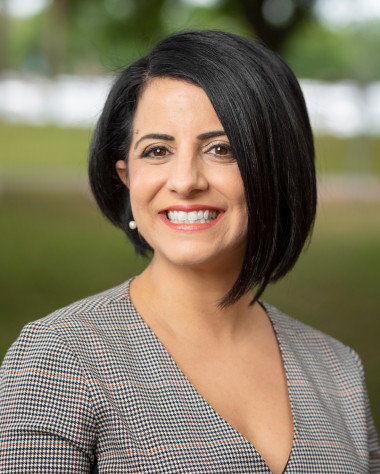
Toward Rigor, Health, & Equanimity: The What, Why, & How of Cultivating Trusting Relationships
During this interactive keynote presentation, Dr. Isis Artze-Vega will describe the multifaceted benefits of trusting relationships for faculty and students alike, including their impact on learning. She will also suggest practical approaches to earning and maintaining trust, crowdsource additional ideas, and offer participants brief and low-stakes opportunities to try out a few trust generators.
Dr. Artze-Vega is the lead author and editor of The Norton Guide to Equity-Minded Teaching and co-author of Connections Are Everything: A College Student’s Guide to Relationship-Rich Education. Most recently, she served as college provost and vice president for academic affairs at Valencia College in Central Florida, which serves about 70,000 students annually and has long been regarded one of the nation’s best community colleges.
Concurrent Sessions I
10:30 AM – 11:30 AM
There are three interactive sessions and three presentations (grouped in a single session) to choose from in this time block.
Room 177 - Interactive Session
SKEPTICS at the Table: Rebuilding Trust in Student Learning in the Age of AI
- Natasha Heny, Associate Professor, Curriculum, Instruction & Special Education, School of Education and Human Development, UVA
- Fang Yi, Assistant Director, A&S Learning Design & Technology, UVA
As generative AI reshapes teaching and learning, many instructors are asking not only what students can do with AI, but how we can sustain trust in the learning process. This interactive session introduces the SKEPTICS framework as a tool for helping students reflect critically on how AI affects their thinking, decision-making, and growth. Participants will explore ways to design assignments that promote transparency, honest self-assessment, and meaningful engagement rather than concealment or overreliance. Through hands-on activities attendees will adapt the framework to their own courses and leave with practical strategies for building trust in student learning.
Commonwealth Room - Interactive Session
“Students Know Themselves!”: Undergraduates’ Experiences with Accessibility and Trust
- Luke Rosenberger, Assistant Director of Digital Accessibility Initiatives, Center for Teaching Excellence, UVA
- Lauren Machen, Undergraduate Student, College of Arts & Sciences, UVA
- Catherine Young, Undergraduate Student, College of Arts & Sciences, UVA
Discussions around academic accommodations and accessibility have grown more frequent in recent years. Public institutions are increasing their efforts to meet accessibility standards, and pushing instructors to redouble their efforts. Often absent from these discussions are the voices of those most impacted: students who rely upon accessible content, assistive technology, or accommodations to support academic success. In this interactive session, students will share stories of barriers and successes, and discuss how trust with peers and instructors impacts their learning experience. Participants will leave the session with concrete ideas to build trust with their students around course accessibility and academic accommodations.
South Meeting Room - Interactive Session
Writing with Laptops in Class: Rebuilding Trust in the Age of A.I.
- Jim Seitz, Associate Professor, English, UVA
- Ali Khokhar, Undergraduate Student, Computer Science, School of Engineering & Applied Science, UVA
- Elizabeth Fox, Undergraduate Student, Music, College of Arts & Sciences, UVA
- Kate Lomuntad, Undergraduate Student, Economics, College of Arts & Sciences, UVA
This interactive session will help participants from various disciplines explore trustworthy methods that allow students to write full essays with their laptops in class. At a time when A.I. is eroding trust between teachers and students, leading many teachers to have students write by hand, the presenters for this session will discuss an approach to writing on laptops that reestablishes trust while creating an optimal classroom environment for composing free of distractions that commonly interrupt concentration. Participants will learn how to assign, assess, and respond to in-class writing in ways that enhance teacher-student relations and develop students' capacities as writers.
Room 389 - Presentations
*CANCELED* Building Classroom Trust Through Servant Leadership: Applying Leadership Research to Higher Education Teaching
- Marian Coleman, Instructor, Public Safety & Justice, School of Continuing & Professional Studies, UVA
Trust between students and instructors is a foundational component of effective learning environments, influencing participation, engagement, and intellectual risk-taking. This presentation explores how servant leadership—a leadership model emphasizing service to followers, fairness, and personal development—can be applied to teaching in higher education. Drawing on findings from a 2024 study of leaders attending the FBI National Academy, which found strong relationships between servant leadership, follower trust, and perceptions of fairness, this session translates leadership research into practical classroom strategies. Participants will learn how servant leadership behaviors can foster psychological safety and trust in the classroom and will leave with concrete practices they can adopt to strengthen student engagement and learning.
Instructional Companion Guide to Promote Engagement and Foster Trust between Undergraduate Teaching Assistants and Students
- Alicia Frantz, Associate Professor, Chemistry, College of Arts & Sciences, UVA
Students may be reluctant to see themselves or their peers as reliable sources of knowledge and will often only seek validation from the instructor. In large enrollment courses, working one-on-one with every student is simply not possible so creating an environment in which students trust their TAs is essential. To instill TAs with confidence in their roles as educators, a companion instructor guide was developed for class activities that includes in-depth explanations, suggested responses, and common student mistakes. The TAs also participate in regular instructional training and attend weekly meetings to discuss upcoming course activities and practice with the guide.
Mentoring Psychology Undergraduates in Field Experience/Internship Courses
- Haeyoon Chung, Assistant Professor, Psychology, James Madison University
- Yanbin Lee, Assistant Professor, Psychology, James Madison University
- Yuxuan Zhao, Assistant Professor, Psychology, University of Wisconsin-Stout
Mentoring psychology undergraduates through practicum courses provides critical hands-on training that complements academic learning and prepares students to become future practitioners and scholars (Amponsah et al., 2014). This presentation shares a trust-centered design for credit-bearing psychology field experiences that cultivates trust across the student-instructor-community triad, fostering reciprocal learning and professional growth. We highlight course design strategies that supports students’ professional identity development and confidence. Attendees will gain a practical “trust protocol” including course and assignment examples that they can implement in their own field placement or internship courses.
Student-Faculty Lunch Conversation
11:45 AM – 12:45 PM | Newcomb Ballroom
Students Perspectives on Trust in Teaching & Learning
- Anna Santucci, Associate Director, Center for Teaching Excellence, UVA
- Jim Carlisle, Youth & Social Innovation, School of Education and Human Development, UVA
- Brian Choe, Computer Science, School of Engineering & Applied Science, UVA
- Thierno Dansoko, Economics, College of Arts & Sciences, UVA
- Sophie Quraishi, Biochemistry, College of Arts & Sciences, UVA
- Rasmi Tangirala, Mathematics & Linguistics, College of Arts & Sciences, UVA
CTE's Undergraduate Student Teaching Consultants invite you to this facilitated student-faculty lunch conversation. We will explore the role of trust and relationships in fostering healthy learning environments in which all students and teachers can grow together and thrive.
Concurrent Sessions II
1:00 PM – 2:00 PM
There are three interactive sessions and three presentations (grouped in a single session) to choose from in this time block.
Room 177 - Interactive Session
Pedagogies of Interconnectedness: Awakening Relational Ways of Knowing
- Dorothe Bach, Associate Director & Professor, Center for Teaching Excellence, UVA
- Jason Bennett, Learning Experience and Environment Designer, A&S Learning Design & Technology, UVA
- Devin Donovan, Associate Professor, English, College of Arts & Sciences, UVA
- Jennifer Lawrence, Assistant Professor of Urban and Environmental Planning, School of Architecture, UVA
- Sasson Rafailov, Lecturer, School of Architecture, UVA
- Devin Zuckerman, Assistant Professor, Religious Studies, College of Arts & Sciences, UVA
This session invites participants to consider emergent pedagogical practices designed to challenge the belief that humans are separate from nature, from each other, and from the consequences of their actions. Drawing on our work in a cross-disciplinary community of practice, we share experiential learning activities that cultivate embodied awareness of relationality, belonging, and ecological entanglement. We highlight how artistic self-expression, place-based inquiry, and playful contemplation can activate instructor and students’ sense of wonder and facilitate trust that our embodied experiences are valid sites of meaning-making. Participants will leave with adaptable learning activities and inspiration for their own teaching.
Commonwealth Room - Interactive Session
Fostering Relational Trust through Feedback
- Jen Pease, Associate Professor of Education, Curriculum, Instruction & Special Education, School of Education and Human Development, UVA
How much time have you spent grading student work this semester, and how much time will you spend in the coming days? What if time spent grading student work was instead devoted to strengthening trust with and among students, cultivating class cultures centered on deep engagement with learning, and guiding students to exemplary performance? What joyful and invigorating spaces our classes would be! We will explore approaches for using feedback as a lever for fostering relational trust with students and identify small changes that can lead to more efficient and powerful learning.
South Meeting Room - Interactive Session
Now That AI Has Changed the Classroom: Fostering Trust and Transparency with Students
- Andrew Kennedy, Assistant Director of STEM Education Initiatives, Center for Teaching Excellence, UVA
- Heidi Nobles, Associate Professor, English, College of Arts & Sciences, UVA
- Rishi Chandra, Global Studies, College of Arts & Sciences, UVA
- Andrew Liu, Computer Science, School of Engineering & Applied Science, UVA
- Salonee Verma, Computer Science, School of Engineering & Applied Science, UVA
- Owen Watzlavick, Economics, College of Arts & Sciences, UVA
Generative AI is rapidly reshaping how students approach coursework, raising questions about transparency, trust, and expectations in the classroom. This interactive session explores how instructors can address these challenges by engaging students as partners and co-creators in shaping course policies and norms around AI use. Created and facilitated collaboratively by faculty and undergraduates, this session brings student perspectives directly into faculty conversations about teaching with AI. Participants will analyze examples of AI policy language, discuss how students interpret these policies, and draft transparent course statements aligned with their pedagogical goals. Attendees will leave with practical strategies for communicating clearly about AI while fostering a culture of trust and shared responsibility for learning.
Room 389 - Presentations
Getting Comfortable Being Uncomfortable: Practices that Foster Community and Participation
- Matthew Street, Senior Lecturer, Spanish, Italian, and Portuguese, College of Arts & Sciences, UVA
Students increasingly enter classrooms deeply connected to the digital world but often disconnected from one another. Many arrive early and immediately retreat into their phones, limiting opportunities for the informal interactions that help build comfort and community. This presentation explores how instructors can help students become comfortable being uncomfortable through small teaching and interpersonal practices that foster community and normalize participation. Drawing on an ongoing Scholarship of Teaching and Learning study in an accelerated beginning Spanish course, the project investigates how everyday pedagogical and interpersonal choices influence students' sense of belonging, foster classroom community, and encourage greater participation. Although the research is situated in a language classroom, the practices discussed are readily adaptable across disciplines.
Scrapbooks as Soul Craft: Trust, Making, and Vulnerability in the First Year Seminar
- Charlie Gleek, Lecturer, The Engagements, College of Arts & Sciences, UVA
Trust functions as the invisible condition of genuine learning, and the most important thing a course can design. In my first-year Engagements seminar, students build physical scrapbooks: bound, handmade books curating curricular, co-curricular, and personal ephemera from their first weeks on Grounds. The assignment demands visible, public vulnerability: glue bleeds through, pages tear, books buckle. That vulnerability only becomes possible inside a trust structure built deliberately from Day 1: ungraded practice, co-authored norms, collaborative evaluation, and one-on-one faculty conversations. Drawing on cognitive science and craft theory, this session demonstrates how trust transforms a frictional and uncertain environment into a community of makers and invites participants to consider what resistant tasks might look like in their own courses.
Teaching Troubleshooting
- Caroline Crockett, Electrical & Computer Engineering, School of Engineering & Applied Science, UVA
- George Prpich, Chemical Engineering, School of Engineering & Applied Science, UVA
Troubleshooting is often viewed as a professional competency, i.e., a skill that engineers acquire through years of experience. We argue that troubleshooting is a learned skill and that instructors can teach troubleshooting fundamentals using experiential tools that scaffold the learning experience. In this presentation, you will take the role of a student to troubleshoot a variety of faulty systems. We will then discuss findings from the literature relating troubleshooting to non-cognitive constructs closely related to trust such as self-efficacy and context.
Concurrent Sessions III
2:15 PM – 3:30 PM
There are three presentations (grouped in a single session), an interactive session, and a book group discussion with our Summit keynote speaker to choose from in this time block.
Commonwealth Room - Presentations
Participatory Classroom Visits: Connecting With Colleagues Through the Student Experience
- Devin Donovan, Associate Professor, English, College of Arts & Sciences, UVA
- Rory Sullivan, Assistant Professor, English, College of Arts & Sciences, UVA
- Rhiannon Goad, Assistant Professor, English, College of Arts & Sciences, UVA
- Ethan King, Assistant Professor, English, College of Arts & Sciences, UVA
- Kate Natishan, Assistant Professor, English, College of Arts & Sciences, UVA
In the fall of 2025, UVA's Writing & Rhetoric Program piloted a voluntary, participatory model of peer-to peer observation. We wanted to see what a model free from the pressure of the renewal and promotion process could do for our teaching and our sense of belonging within the program and at the University. The results were both heartening and enlightening. In this session, faculty participants will share about why they signed up, what it was like to participants as a student in a colleague's class, and how the experience enhanced their connection to their students, their colleagues, and their craft.
Forging Trust in the Classroom while Promoting Resilience & Wellness
- Richard Ridge, Assistant Professor, School of Nursing, UVA
The purpose is to share my experiences conducting regular and consistent weekly 10 class check-ins with students that include stress injury self-assessment, emotional state reflections, and identification of prevention and management strategies. Initially designed to promote resilience and mental health wellness, the check-ins have fostered a safe, collaborative, and effective learning environment where students experience benevolence, faculty consistency & dependability, and openness to communication regarding stress and wellness.
Crafting a First Year College Engagements Cohort: Building Trust and Community in the Classroom
- Lilian Feitosa, Associate Professor of Portuguese, Spanish, Italian, and Portuguese, College of Arts & Sciences, UVA
- Shilpa Davé, Advising Dean & Associate Professor, Media Studies, College of Arts & Sciences, UVA
This presentation details the process of crafting the 2025-2026 Race Place and Equity Engagements cohort. The cohort courses introduce students to the histories and legacies that shaped Charlottesville and central Virginia while also teaching the fundamentals of place-based and community-based learning. The yearlong cohort format fosters a sense of community while facilitating critical thinking and building trust in each other and the professors. The courses invite participants to reflect upon their own histories, and shared experiences at UVA, learning from each other, while fostering connection to communities in Charlottesville, the Commonwealth and beyond.
South Meeting Room - Interactive Session
Shuffle Your Teaching Deck: Instructional Moves From UVA
- Scott Barker, Professor, Electrical and Computer Engineering, School of Engineering & Applied Science, UVA
This interactive session will highlight effective teaching practices taking place across Grounds, drawing on case studies from UVA colleagues and real student feedback. Participants will explore a deck of research-informed teaching strategies cards, each describing an instructional move and offering tips for how you might use it in your own classes. You’ll leave with concrete ideas to change up your teaching.
Room 376 - Small Group Discussion
Graduate Student Book Group
- Special guest: Isis Artze-Vega, Summit keynote speaker and coauthor of The Norton Guide to Equity-Minded Teaching
- Facilitator: Jeremy Ortmann, Graduate Student, Biomedical Engineering, UVA
This is the third and final meeting of our Summit book group. All graduate students are welcome to join this discussion with our Summit keynote speaker.